
Classical Incompatibilism: Why Free Will and Determinism Can't Coexist
Is free will incompatible with our choices being determined? The compatibilist says no. Free will just means doing what you want without impediment, and that's perfectly consistent with a determined universe. But the incompatibilist looks at that answer and sees a dodge. If the past and the laws of nature fixed every choice you'd ever make before you were born, then calling those choices "free" is just wordplay.
Incompatibilism takes the tension between free will and determinism at face value: the two really are in conflict. If determinism is true, free will is impossible. Full stop. The interesting question is what follows from that.
The Two Core Arguments
Incompatibilists have two main lines of attack against compatibilism, each targeting a different aspect of what free will seems to require.
The first is the Basic Leeway Argument. It runs like this: if a person acts of her own free will, then she could have done otherwise than she actually did. But if determinism is true, no one can do otherwise than they actually do, because the past plus the laws of nature fix exactly one future. Therefore, if determinism is true, no one acts of her own free will.
The second is the Basic Source Argument. A person acts of her own free will only if she is the ultimate source of her actions. But if determinism is true, no one is the ultimate source of anything she does, because every action traces back through a causal chain to conditions that existed long before the agent was born. Therefore, if determinism is true, no one acts of her own free will.
Both arguments are valid. If you accept the premises, the conclusion follows. The compatibilist's strategy, as we saw in the previous post, is to reject premise 1 in each case by redefining what free will requires. The incompatibilist insists that those redefinitions gut the concept of freedom of everything that makes it matter.
Two Roads from Incompatibilism
If you accept that free will and determinism can't coexist, you face a fork. Something has to give: either determinism or free will.
Those who give up determinism are called libertarians (in the philosophical sense, not the political one). They hold that free will is real and that the universe must therefore contain genuine indeterminacy, at least when it comes to human choices. We do have the ability to do otherwise. We are the ultimate sources of our actions. And this is possible because not everything is determined by prior causes.
Those who give up free will are called hard determinists. They hold that determinism is true (or close enough to true) and that free will is therefore an illusion. We feel free, but we aren't. Our sense of choice is just the subjective experience of a causal process running its course.
Both positions are uncomfortable. Libertarianism has to explain how indeterminate choices can be free rather than merely random. Hard determinism has to explain how moral responsibility, praise, blame, and punishment can be justified if no one is truly responsible for what they do. The incompatibilist framework forces you to pick your discomfort.
The Problem of Micro-Indeterminism
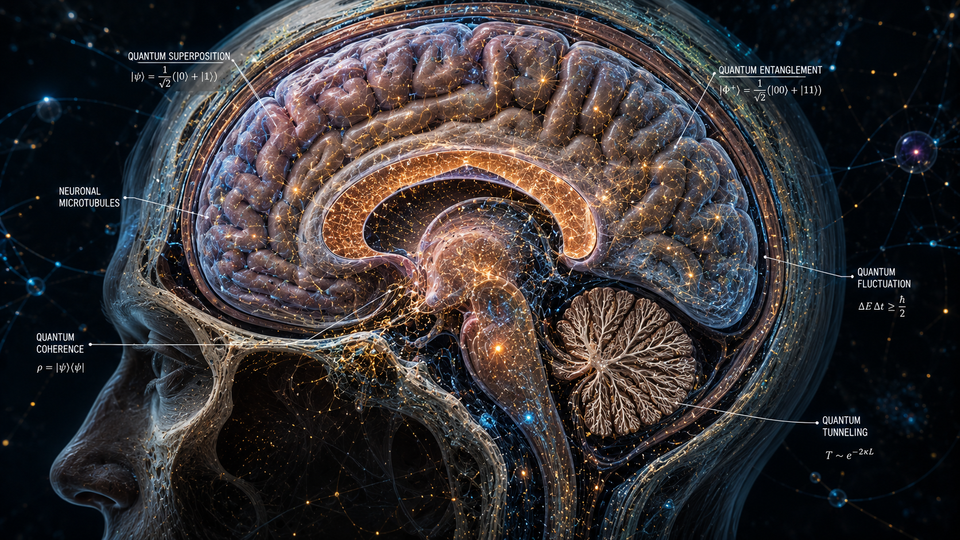
One might think quantum mechanics helps the libertarian. After all, physics has shown that at the subatomic level, events are genuinely indeterministic. Photon behavior is probabilistic, not determined. Doesn't that break the deterministic picture and leave room for free will?
Not quite. The problem is that quantum indeterminacy operates at the micro level, the level of photons and subatomic particles, while our choices operate at the macro level, the level of neurons, brains, and behavior. Many philosophers accept that indeterminism is real at the quantum scale but that determinism is effectively true at the scale of everyday experience. The quantum randomness averages out. By the time you get to the level at which human decisions happen, things proceed in a determinate manner.
So even if the universe is indeterministic at its foundations, that indeterminism may not reach up to the level where it would matter for free will. Our choices, the ones we care about, still look determined.
The Luck Objection: Indeterminism Is a Problem Too
But suppose the libertarian gets past the micro-indeterminism worry. Suppose genuine indeterminacy does operate at the level of human choice. There's a further problem, and it's arguably even more damaging: indeterminism doesn't obviously give you free will. It might just give you randomness.
The argument is simple. If something happens indeterminately, then it is just by chance whether or not it happens. If it happens by chance, it is out of the control of the agent. And if it's out of the agent's control, it doesn't happen by free will.
This is sometimes called the "luck objection" to libertarian free will. The libertarian needs choices to be neither determined (which would rule out the ability to do otherwise) nor random (which would rule out control). Free will, it seems, requires something in between: an action that is not necessitated by prior causes but is still somehow under the agent's control. That's a very narrow space to occupy, and it's not obvious that it's coherent.
Agent Causation: A Way Out?
The most ambitious libertarian response to the luck objection is the theory of agent causation. The standard picture of causation is event causation: one event (the cue ball striking the eight ball) causes another event (the eight ball moving). On this picture, every event in the causal chain is determined by the prior event, and there's no room for an agent to intervene.
Agent causation proposes a different model. It starts from three assumptions: if A causes B, then A causally necessitates B; if an event occurred without a cause, it was not in the agent's control; and the only credible explanation of an event is that something causes it. Given these constraints, how can a choice be neither determined by a prior event nor a random uncaused occurrence?
The answer: it can be caused by an agent rather than by a prior event. On this view, agents are a fundamentally different kind of cause. They don't have to be accounted for in terms of event causes. They can initiate causal chains without themselves being caused to do so. When you choose the salmon over the tuna, it's not that a prior event in your brain determined the choice, and it's not that the choice popped into existence randomly. You caused it, where "you" names something irreducible to the chain of events running through your neurons.
This is a powerful idea, and it captures something deep about how we experience our own agency. When you make a difficult decision after careful deliberation, it really does feel like you are the one doing the choosing, not like you're watching a chain of dominoes fall.
The Cost of Agent Causation
But agent causation comes at a steep price. It posits a kind of causation that doesn't fit neatly into the scientific picture of the world. Physics deals in events causing events: particles interacting with particles, forces acting on objects. Introducing a new category of cause, one that operates outside the event-causal framework, raises hard questions. What kind of thing is an agent, metaphysically speaking? How does agent causation interact with physical causation? If your neurons are doing one thing and "you" override them, what exactly is happening at the physical level?
Of course, one could always respond: so much the worse for a scientistic worldview. If we need to accept entities that make sense of the world but aren’t empirically discovered, then we are jus in doing so.
Where Things Stand
Classical incompatibilism maps the free will debate with admirable clarity. If you think free will requires the ability to do otherwise or ultimate sourcehood, and you think determinism rules those out, then you're an incompatibilist. From there, you either embrace libertarianism and face the luck objection, or you embrace hard determinism and face the consequences for moral responsibility.
Neither option is easy. But the incompatibilist's diagnosis of the problem remains compelling: the compatibilist's "lean" version of freedom, freedom as merely doing what you want, leaves out something that matters. Whether that something can be recovered without abandoning the scientific worldview is the question that drives the rest of the free will debate.