
"What Does It All Mean?" by Thomas Nagel

Should You Start with Nagel?
In my last book review I asked whether Sophie's World is the right first philosophy book. The honest answer was: sometimes. It depends on what you want. Sophie's World gives you a map — the history of Western thought from the pre-Socratics through Sartre, dressed in a young-adult mystery novel.
Today I want to talk about the other answer to the same question. What Does It All Mean?: A Very Short Introduction to Philosophy, by Thomas Nagel, is 99 pages long, has no characters, no story, and no historical timeline. It asks nine questions and walks you through what is actually at stake in each one. If Sophie's World gives you a map, Nagel gives you the questions philosophers are actually trying to answer.
For some readers, that is exactly the right place to start.
Who Wrote It
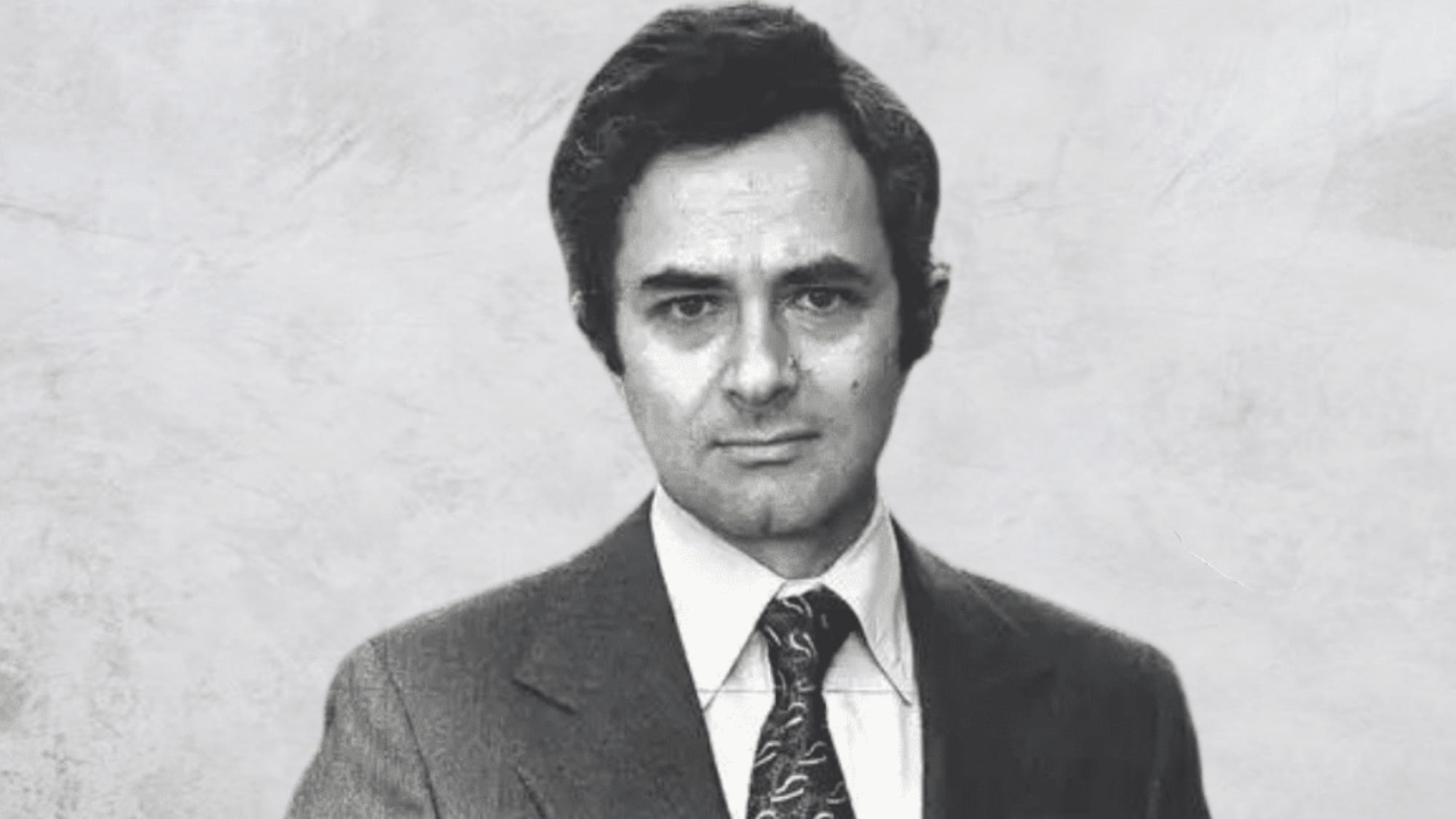
Worth dwelling on this for a minute, because the cover does not tell you. Thomas Nagel is not just a guy who writes intro books. He is one of the most important living philosophers in the English-speaking world.
His 1974 paper "What Is It Like to Be a Bat?" is one of the most-cited philosophy papers of the 20th century. His 1986 book The View from Nowhere is a major work on the tension between subjective and objective ways of seeing the world. His 2012 book Mind and Cosmos caused an academic firestorm when he — an atheist — argued that materialist reductionism could not explain consciousness, and got accused of being a crypto-creationist by his own peers for the trouble.
Across all of this, there is a coherent intellectual project. Nagel is the philosopher of the irreducibility of the subjective. He keeps insisting that there is something it is like to be a particular conscious being, that this something cannot be fully reduced to physical description, and that any picture of the world that pretends otherwise is missing the most important data we have. His intro book is the doorway into all of that.
The other thing to know about Nagel: he is unusually fair. In Mind and Cosmos he publicly broke with the materialism his own tribe takes for granted, took serious heat for it, and held his position. He is a rare model of how to argue across worldviews instead of from inside one. That habit shows up on every page of What Does It All Mean?
The Problem-First Approach
Nagel's book is built around nine questions. How do we know anything? Do other people have minds? What is the relationship between mind and brain? What is the meaning of words? Is there free will? What grounds right and wrong? What is justice? What is death? What is the meaning of life?
What is not in the book is almost as revealing. No history. No quotes from Kant. No timeline of who said what and when. Nagel explicitly says in the introduction that the raw material for philosophy comes from the world we actually live in, not from a curriculum of dead authors. If the question of free will does not bite you when you encounter it cold, no amount of background on Spinoza is going to help.
This is a real philosophical claim. It is the analytic tradition's stance — philosophy is what you do when you sit down with a problem and reason about it carefully, full stop. There is a serious counter-argument that philosophy detached from its tradition becomes thin and ahistorical. I think the counter-argument has some bite. But for an introduction, Nagel's approach has a huge advantage: it does not make you wade through centuries of names before you get to wonder.
This is why the book pairs so well with Sophie's World and is the better starting point for some readers. Sophie's World teaches you who said what. Nagel teaches you what the questions actually feel like from the inside.
The Death Chapter
The chapter on death is the strongest one in the book, and the best example of what Nagel can do in a few pages.
He grants up front that he does not believe consciousness survives death — and then refuses to use that view as a club. He just lays the question down: the fear of death is as puzzling as death itself, because if there is nothing after death, there is no one left to whom anything bad is happening.
The thinking he opens up is older and richer than the chapter has space to develop, and this is where a blog post can do something the book cannot. The question of how to think about death has a lineage.
Socrates, in the Apology (40c–41c), says death is one of two things. Either it is dreamless sleep — and most of us have had nights of dreamless sleep we would gladly extend — or it is going somewhere, in which case we get to meet everyone who has died before us. Either way, he says, the wise person does not fear it.
Epicurus sharpened this. Death, he wrote, is nothing to us — because when we exist, death is not present, and when death is present, we no longer exist. There is no moment at which death is happening to us in a way we could suffer.
Lucretius added the symmetry argument. We accept the eternity that came before our birth without distress. Why does the eternity that comes after our death feel so different? They are structurally the same period: existence without us in it.
This is the territory Nagel is gesturing at. His own observation in the book sits inside a 2,400-year conversation. He gives you the question; the lineage shows you that the question has been worth a lifetime to many people before you.
The Pascal Question
Nagel does not pursue this in the book, but he opens the door to it, and I want to walk through.
If you grant Nagel's framing — that we cannot know whether anything of us survives death — you arrive at a question. Suppose you are 99% confident that nothing happens after we die. Should you still spend your life preparing for the 1% chance that something does, given how much is at stake if it does?
This is Pascal's Wager, from the Pensées, written in the 1660s. Pascal's argument: given an infinite payoff or infinite cost, even a small probability changes what a rational person should do. Even if God is unlikely, the expected value of belief is overwhelming.
The probability of survival is not zero, and that the consequences of the question being real are not small. That is a genuine result. What you do with it from there — whether you investigate the specific claims of a tradition, dismiss the question as unanswerable, or live as if the answer is yes — is the actual philosophical work. Nagel's book gets you to the door. It does not walk you through it.
What the Book Gets Right, and What It Leaves Out
Right: concision (you really can read it on a plane). Fairness — Nagel almost never lets you guess where his own bets are placed. No jargon. Problem-first design that respects the reader's intelligence.
Left out: aesthetics is barely there. Political philosophy gets a quick treatment. No non-Western traditions. Christianity gets a fair-but-compressed treatment as one option among several — which is fine for an intro, but means a reader who wants the Christian tradition argued for will need to go elsewhere.
There is also one place where I think Nagel actually misses, and that is his chapter on the meaning of life. His framing — that the question is somewhat unanswerable because no purpose justifies itself — leaves out the older view that meaning is not something we manufacture but something we receive from a source larger than us. I made the longer version of this argument in my "Meaning of Life: Philosophy Can Help!" video, so I will not repeat it here. Just know: when you hit that chapter, there are answers Nagel does not survey.
What to Read Next From Nagel
If the book lights you up:
- "What Is It Like to Be a Bat?" (1974). Short. Free as a PDF if you search for it. One of the most influential philosophy papers ever written. Read it.
- The View from Nowhere (1986). The deeper, harder version of Nagel's project on subjective and objective standpoints.
- Mind and Cosmos (2012). The controversial one. An atheist arguing materialism is incomplete. Surprisingly accessible.
The Bottom Line
What Does It All Mean? is the right first philosophy book if you want to start with the questions rather than the history, you trust an honest interlocutor more than a tour guide, and you would rather finish a short book than start a long one.
It pairs naturally with Sophie's World. If you read both, in either order, you will have a map of the tradition and the questions the tradition was trying to answer — and you will know which way of doing philosophy fits how your mind works.
For the right reader, this is the best 99 pages in popular philosophy.